The Wild Prophet
When we think about John the Baptist, we tend to picture a ragged, half-crazed desert preacher — camel hair for clothes, wild honey in his beard, shouting about repentance while dunking people in the Jordan River. A supporting character at the beginning of Jesus’ story. The opening act before the main event.
In my opinion, we’ve sanded down his rough edges a little too much.
John the Baptizer wasn’t just a quirky preacher paving the way for Jesus. He was a societal disruptor. A revolutionary. A wilderness prophet who stood outside the system not just geographically, but theologically. He wasn’t just announcing Jesus; he was embodying a radical shift — one we still wrestle with today.
Let’s take a deeper look at the man Jesus called “the greatest among those born of women” (Matthew 11:11).
The Wilderness Prophet
John didn’t preach in the temple. He preached in the wilderness. That alone should be setting off all the lights on your dashboard. Something more is going on here just beneath the surface.
In Jewish thought, the wilderness wasn’t just a location. It was a symbol. Chaos. Testing. Transformation. Israel wandered there for forty years. Prophets met God there. Jesus would be tested there.
And John? He didn’t just visit the wilderness. He became it.
- He wore camel’s hair and a leather belt — the uniform of Elijah (2 Kings 1:8), signaling that he wasn’t just another preacher but a prophet in the old tradition, standing in defiance against the powerful and idolatrous.
- He ate locusts and wild honey — food of the poor, the unclean, the untamed.
- He rejected the privilege and status of his priestly lineage (his father, Zechariah, was a temple priest) and instead lived on the fringes of society.
He wasn’t a prophet within the system. He was a prophet who was raging against the system.
Repentance: More Than Feeling Bad
John’s central message boiled down to one word: “Repent!”
But the Greek word used — metanoia — doesn’t mean “feel bad for your sins.” It literally means “change your mind,” or more deeply, “go beyond your current way of thinking.”
John wasn’t calling people to wallow in guilt. He was calling them to wake up. To see differently. To think differently. To change their mind.
Repentance wasn’t about religious rule-following. It was about freedom — stepping out of old patterns, old assumptions, old ways of being, and into something new. It was about loosening the grip of fear, power, and control so people could be in a state to recognize the Kingdom that Jesus was bringing.
My friends in Convictions actually released a song all about this type of spiritual shift aptly titled “Metanoia” and if you’re in to Metalcore you should check it out!

Baptism: A Radical Act of Rebirth
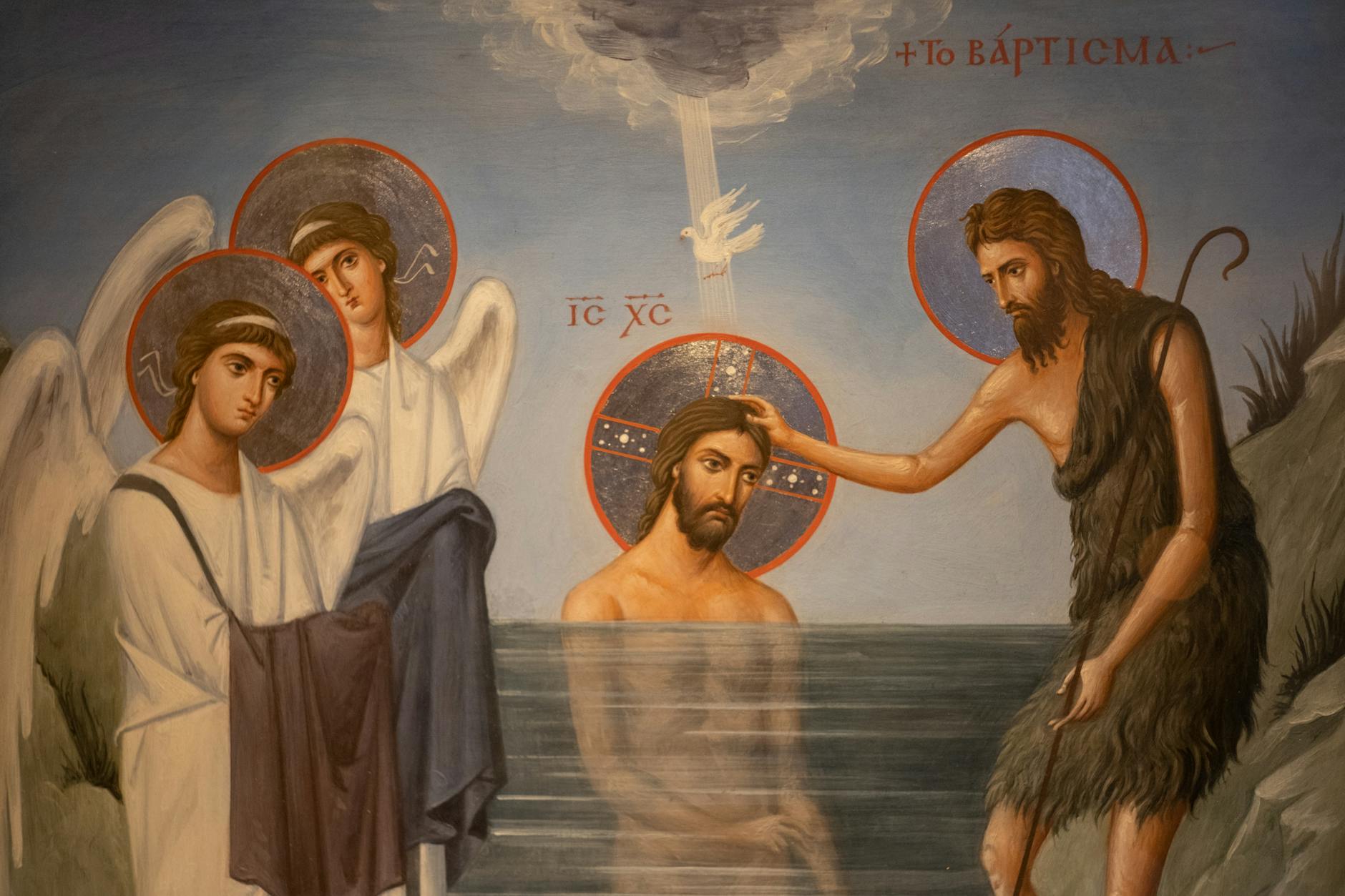
Baptism wasn’t new. Ritual washing was already a part of Jewish tradition. But as with most things in the scriptures: John did something different. Something new.
In the temple, ritual washing was about purity — preparing to enter God’s presence. It was something you did repeatedly, cleansing yourself over and over.
John took it out of the temple and into the Jordan River. And suddenly, it wasn’t about ritual purity anymore.
It was about death and rebirth.
Going under the water was a symbolic burial of the old self. Rising up was a step into new life. A life not defined by Rome, not controlled by the temple, not shackled by fear.
It wasn’t about being clean. It was about being free.
The Baptist and the Lamb
Then one day, Jesus showed up at the river.
John saw him and said, “Behold, the Lamb of God, who takes away the sin of the world!” (John 1:29)
It’s easy to miss how shocking that was. The crowd would have expected a Messiah described as a lion — a warrior-king, a liberator.
But John calls him a lamb — a symbol not of power, but of sacrifice.
John saw what others missed. Jesus wasn’t coming to conquer through violence. He was coming to conquer through self-giving love. Flipping the whole thing upside down.
What John Means for Us
John’s life wasn’t comfortable. It wasn’t safe. It ended in a prison cell, with his head on a platter.
But his radical message still echoes:
- Go to the wilderness. Sometimes you have to leave the familiar — the systems, the beliefs, the comforts, the noise — and go out into unadulterated creation to hear God clearly.
- Repent. Not by beating yourself up, but by letting go of the old familiar ways that no longer serve truth or love.
- Step into the water. Leave behind what’s false. Rise into what’s real.
- Point to the Lamb. Even when people expect a lion or a king. Even when they want power and control, point to self-giving love instead.
John reminds us that sometimes, the way to prepare for new life is to step outside of the old one — even when it’s messy, uncomfortable, or lonely.
Because the wilderness isn’t where life ends.
It’s where new life begins.

 The Way of the Source
Leave a comment