
There’s this moment.
If you’ve ever been in a worship service—like, really been in it—you know the one.
It’s not the opening song, where people are still settling in, still checking their phones, still thinking about where they’ll eat after. It’s not the big anthem in the middle, the one designed to stir things up, to get people moving and responding.
No, the moment comes later. Near the end.
It’s the one where the room feels different. Where the lights are low, and everyone is connected by something more. Where the music swells, not because it has to, but because it can’t do anything but split open the sky.
It’s the moment where the weight of everything—the doubt, the longing, the unspeakable ache—finds its way into the melody. The guitars shimmer, the drums carry like distant thunder, and the chorus, once whispered, is now belted from the deepest part of the chest.
And then, just like that, it’s gone.
That moment?
That’s Euclid.
This isn’t just a song. It’s a Benediction.
Sleep Token has returned with Even in Arcadia, an album that feels like it emerged from the wreckage of a collapsed cathedral, still echoing with unanswered prayers. It opens with the haunting question: “Will you halt this eclipse in me?” That’s not just poetic. That’s liturgical. That’s a soul asking for the sun to rise again inside their own chest. And while the album offers no easy resolution, it does what all sacred art does—it leads us deeper into the ache, and maybe, gently, toward the light.
And in the context of this new release, Euclid doesn’t just feel like a final track from the previous arc. It feels like an intercession whispered across time. A response to the eclipse.
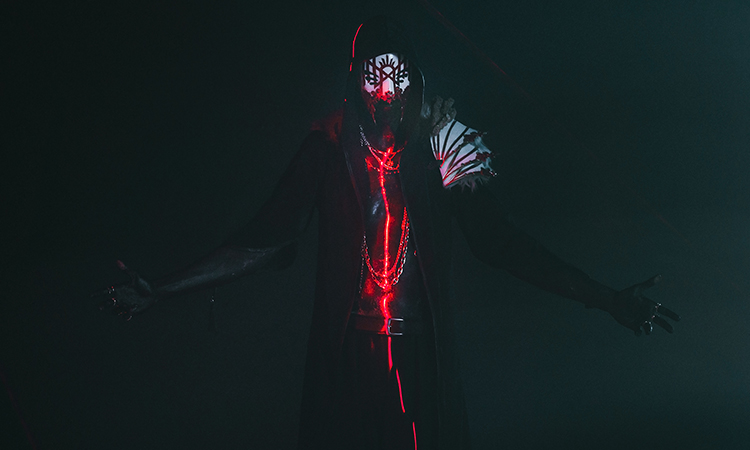
For those unfamiliar with Sleep Token, Euclid is the final track on their previous release Take Me Back to Eden, the last of a three-album arc that has unfolded like some kind of a modern mythos.
It’s a story of devotion, obsession, of something (or someone) greater-than beckoning from beyond. A love that might not be love. A god that might not be god. A voice that calls and calls until you can no longer tell if it’s leading you home or leading you into the abyss.
And here, at the end of it all, we get Euclid.
Not with a bang. Not with fury or vengeance or some grand declaration. But with a soft, fragile acceptance and surrender.
Like the best worship songs.
Like the best endings.
The Worship Song Structure™, Perfected.
Worship music lives and dies on its ability to create space. Space to feel. Space to ache. Space to let go.
And Euclid? It builds that space like a sanctuary. Listen along if you want as I break it down.
- The Opening: A Whispered Prayer
Soft keys. A voice, hushed, almost afraid to enter the room.
It’s the vulnerable invocation. The invitation.
Come and see. - The Build: Anticipation & Devotion
The instrumentation layers build slowly, reverently, like walking into something sacred. Each verse adds weight, each chorus expands, the vocoder gives musical space for tension, the pulse quickens… kinda like a heartbeat in a quiet room. The drums are in complete control of the energy building here.
And then, everything shifts. - The Release: The Spirit Moves
The final chorus erupts, the guitars crashing like waves, the drums relentless. Voices layered upon voices. A song that was once a whisper is now a flood.
It’s the “Oceans” moment.
The “With Everything” moment.
The moment in every worship set where arms lift, eyes close, and the room isn’t just a room anymore.
It’s so much bigger than that now. - The Benediction: Letting Go
And then?
The fade. The sigh. The last note rings out, soft as breath.
No resolution. No closure. Leaving something stirring within your soul which is now ripe for transformation.
Like the best worship songs.
Like the best prayers.
Why It Works (And Why Worship Leaders Should Take Notes)
There’s a reason modern worship music thrives on these dynamics. It’s not just about lyrics, or theology, or even belief. It’s about energy. Tension. Release. Surrender.
The best worship songs aren’t just sung or performed.
They’re entered into. They’re experienced.
And Euclid is nothing if not a complete experience.
It starts in a place of intimacy. Moves through longing. Climbs toward something unspeakably powerful. And then, in one final breathtaking surge, it arrives like a flood—not at certainty, not at resolution, but at the only thing that ever truly remains:
Love.
Not the easy kind. Not the simple Hallmark all-smiles kind.
But the real kind. The aching kind. The kind that knows loss, and still chooses to give. The kind that breaks, and still finds a way to hold on.
So maybe Sleep Token didn’t write Euclid as a “worship” song.
Maybe they did.
But either way, if you’ve ever stood in a room filled with voices that were bigger than those in the room, if you’ve ever let a melody carry you beyond yourself, if you’ve ever felt something break and build and become—
Then you know.
This song belongs there.
A Quick Word on Sleep Token
For the uninitiated, Sleep Token is more than just a band—it’s a ritual. An anonymous collective led by the enigmatic Vessel, they blend genres and spiritual archetypes with reckless grace, weaving metal, R&B, ambient, and pop into something altogether sacred. Their live shows are called “Rituals.” Their lyrics read like confessions. And their music often feels less like performance and more like invocation.
To those of us exploring the Way of the Source—a path rooted in oneness, mysticism, and sacred resonance—Sleep Token doesn’t just entertain. They echo. Their work hums with that same divine ache: the desire to be known, to be transformed, to belong to something greater.
It’s not doctrine. It’s devotion. And in a world drowning in noise and algorithms, that matters.
Let those with ears to hear, listen.
If this stirred something in you, make sure to subscribe and join the conversation—I’m building a community of seekers, skeptics, and mystics who see beyond the surface and hear the sacred in unexpected places.
Also, keep an eye out for my upcoming field guide: How Not to Lose Your Family While Losing Your Religion. It’s a resource for navigating the beautiful, brutal path of deconstruction without burning every bridge along the way.
🖤JD

 The Way of the Source
Leave a comment